Dehumidifier for Water Damage
Moisture Frame participates in the Amazon Services LLC Associates Program. As an Amazon Associate I earn from qualifying purchases.
Time matters more than the machine. The EPA says that if wet materials are dried within 24 to 48 hours of a leak or spill, in most cases mold will not grow. A home dehumidifier helps you hit that window after a burst pipe, a soaked carpet or a little water in the basement. It is one tool in the drying, not the whole job, and some situations are not a do-it-yourself job at all.
When to call a professional instead
The EPA's guidance points to professional help when:
- The water came from sewage or was otherwise contaminated.
- There was a lot of water damage, or mold already covers more than about 10 square feet.
- You suspect the heating and cooling system is contaminated. Don't run it in that case: it can spread mold through the house.
- Flooring may be asbestos tile. The EPA says not to remove asbestos-containing floor tile yourself, even if it is damaged.
The EPA's flood guidance adds two cautions of its own: if water is several feet deep, pumping it out too fast can crack walls and floors, and older homes may have lead-based paint on walls you're about to tear out.
Drying out a room
- Get the standing water out. A pump or wet vacuum first; a dehumidifier pulls moisture from the air, not puddles off the floor.
- Remove what can't be saved. The EPA notes that porous materials such as carpet and ceiling tiles may have to be thrown away if they get moldy.
- Close the room and run the dehumidifier. ENERGY STAR's placement advice: keep doors and windows of the space closed and leave room around the unit for air to move. The EPA also suggests fans for air movement as needed.
- Measure until it's dry. A hygrometer shows when the room is back under 60 percent, the EPA's upper limit. The EPA's flood guidance is that everything must be completely dry before walls and floors go back in.
Size, drainage and temperature
- Size for the "wet" row. ENERGY STAR's chart puts a wet space at 30 to 50 pints a day under 2,000 square feet and 50+ above it. A water-damaged room is that row, at least at first. The sizing page has the chart and a calculator.
- Drain without a bucket. After a leak, a unit fills its bucket fast and then stops. A built-in pump or a hose to a floor drain keeps it running overnight.
- Mind a cold basement. ENERGY STAR notes that frost can form on the coils below 65°F, which cuts what the unit removes.
Two dehumidifiers for a wet space

hOmeLabs HME021006N 50-pint dehumidifier with built-in pump
- Capacity: 50 pints/day, rated for up to 4,000 sq ft
- Built-in condensate pump + drain hose: keeps running without emptying a bucket
- The Amazon listing says ENERGY STAR; we could not find the model in the ENERGY STAR database, so treat it as the listing's claim
The better fit after a leak: 50 pints sits at the top of ENERGY STAR's range for a wet space under 2,000 square feet, and the pump means it keeps working through the night. Honest caveat: this exact model isn't in the manufacturer's current lineup of Wi-Fi-enabled units, though it's still sold as new by several independent retailers; check the listing before buying.
Check Price on Amazon (paid link)
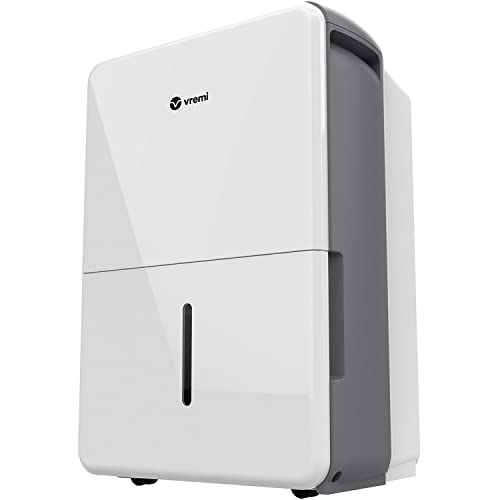
Vremi 35-pint dehumidifier, manual drain
- Capacity: 35 pints/day (as listed; see the sizing page on rating year)
- Manual bucket, no built-in pump: empty by hand or run a gravity drain hose yourself
Within the chart's range for a smaller wet room, and simpler. Without a pump, it needs a floor drain for the hose or someone to empty the bucket, which after a leak can mean several times a day. We could not verify noise level or room coverage from a source we could read.
Check Price on Amazon (paid link)
If it still smells musty
A musty smell weeks later usually means something stayed wet: under the carpet pad, behind drywall, under a cabinet. The EPA lists those as common places for hidden mold. Finding where a musty smell comes from walks through the likely spots, and preventing basement mold covers keeping it from coming back.
Where this comes from
U.S. EPA, A Brief Guide to Mold, Moisture, and Your Home (updated February 18, 2026) and Flooded Homes: Doing it Yourself (updated June 22, 2026). ENERGY STAR, Dehumidifiers. All read October 5, 2026. Product details are the same as on Best Dehumidifier for Basement, with the same caveats.