Best Dehumidifier for Basement
Moisture Frame participates in the Amazon Services LLC Associates Program. As an Amazon Associate I earn from qualifying purchases.
Basements get damp for a structural reason, not bad luck: an unsealed vapor barrier (or none at all) lets soil moisture evaporate up through the slab or crawlspace-adjacent subfloor; poor foundation drainage adds bulk moisture on top of that. That combination is why a basement often reads higher humidity than the rest of the house even with the same dehumidifier running upstairs.
This is a short version. For the full structural mechanism and a genuine cutaway diagram, see Crawlspace Moisture, which covers this in more depth for the crawlspace-adjacent case. Drying out after a leak or a flood is a different job with a deadline: see dehumidifier for water damage.
Quick picks for basements

hOmeLabs HME021006N 50-pint dehumidifier with built-in pump
- Capacity: 50 pints/day, rated for up to 4,000 sq ft
- Built-in condensate pump + 16.4 ft drain hose: runs unattended, no daily bucket emptying
- The Amazon listing says ENERGY STAR; we could not find the model in the ENERGY STAR database, so treat it as the listing's claim
A continuous-drain pump is the one basement-specific feature worth insisting on: a basement is exactly the space nobody checks a bucket in every day. We could not confirm which DOE test procedure (pre- or post-2019) this listing's 50-pint figure uses. See Dehumidifier Sizing & the 2019 DOE Rating Change before comparing it to a different unit's rating. Honest caveat: this exact model isn't in the manufacturer's current lineup of Wi-Fi-enabled units, though it's still sold as new, in stock, by several independent retailers with no discontinuation notice anywhere we could find, worth a quick stock check on the listing itself before buying.
Check Price on Amazon (paid link)
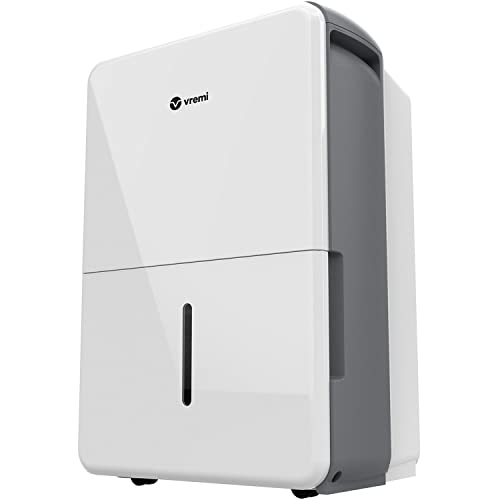
Vremi 35-pint dehumidifier, manual drain
- Capacity: 35 pints/day (as listed; see note below on rating year)
- Manual bucket, no built-in pump: empty by hand or run a gravity drain hose yourself
- The Amazon listing says ENERGY STAR; we could not find the model in the ENERGY STAR database, so treat it as the listing's claim
The alternative if you don't want or need the pump above: a simpler unit at a smaller capacity, for a basement that isn't severely damp or where you're fine checking a bucket periodically. Same honest gaps as this unit's own General Hub listing: we could not verify noise level, room-coverage area, or which DOE test procedure this 35-pint figure is measured under from a source we could actually read.
Check Price on Amazon (paid link)
| Which matters for a basement | hOmeLabs HME021006N | Vremi 35-Pint |
|---|---|---|
| Capacity (as listed) | 50 pints/day | 35 pints/day |
| Coverage (as listed) | Up to 4,000 sq ft | Not stated by a source we could read |
| Drainage | Built-in pump + hose, unattended | Manual bucket (or a gravity hose you run yourself) |
| Best fit | Severely damp basements, or if you don't want to check a bucket at all | Less-severe dampness, or a lower upfront cost with more manual upkeep |
Rating year matters here too
The same 2019 DOE rating change that affects general dehumidifiers applies to basement units. See Dehumidifier Sizing & the 2019 DOE Rating Change before comparing capacity numbers across listings.